 English
 Chinese (Simplified)
 Chinese (Traditional)
 Croatian
 Czech
Czech Danish
 Dutch
Dutch English
 Filipino
 Finnish
 French
 German
 Greek
Greek Hebrew
 Hungarian
 Icelandic
 Indonesian
 Irish
Irish Italian
 Japanese
 Korean
 Latin
Latin Lithuanian
 Norwegian
 Persian
 Polish
 Portuguese
 Romanian
 Russian
 Spanish
 Swedish
If you live in or near a city, you see maybe 1-2% of the stars that are actually in our sky. Greater Zion offers some of the darkest night skies in the United States, so when you visit, you can see the stars as they’re meant to be seen: vast, vivid, and vibrant.
As home to Zion National Park — a certified International Dark Sky Park — our region provides unparalleled opportunities to witness the sky in all its glory.
Discover Where Stars Shine Brightest
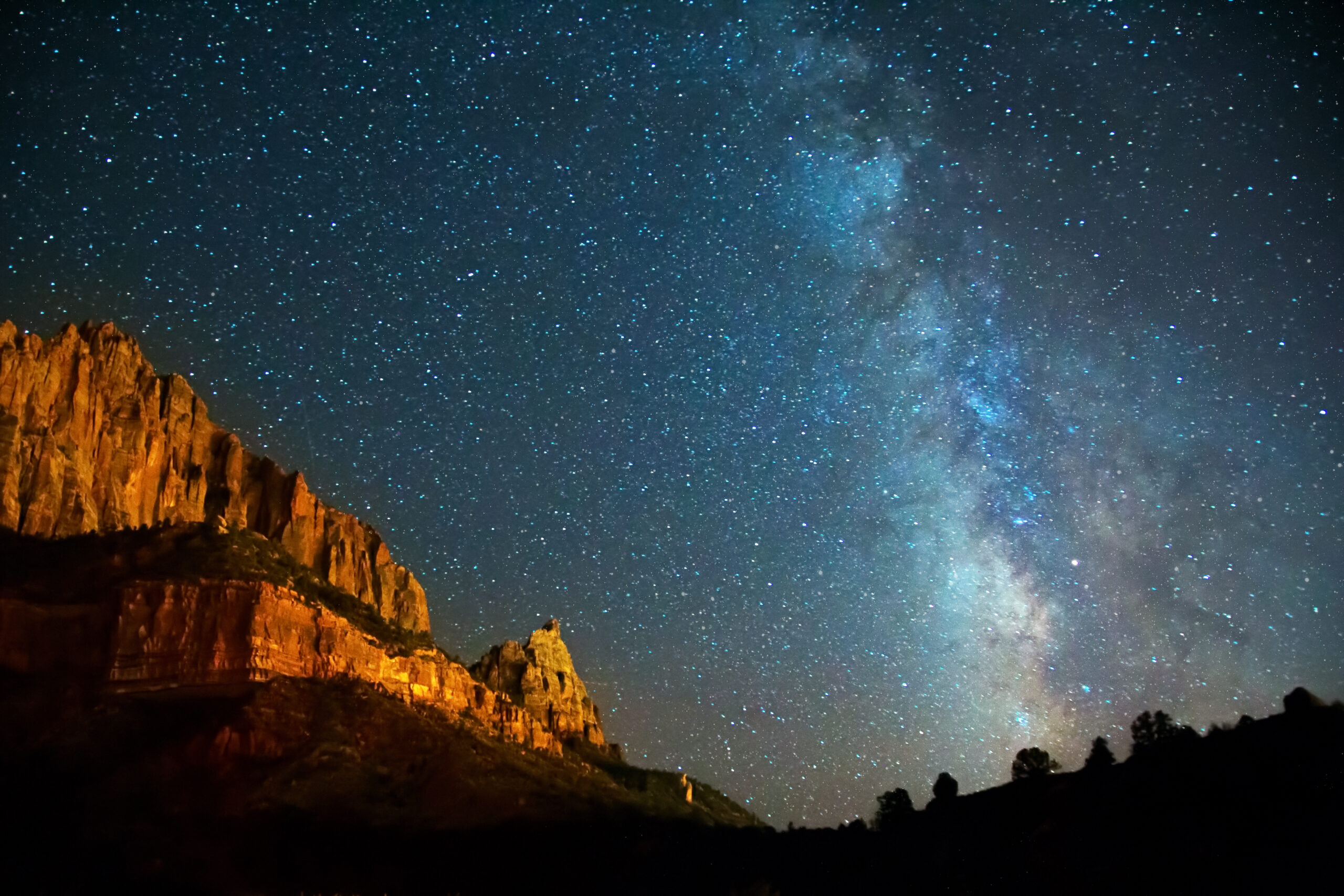
Zion National Park
Certified as an International Dark Sky Park, Zion National Park offers spectacular stargazing among towering sandstone cliffs. Rangers host astronomy programs throughout the year.
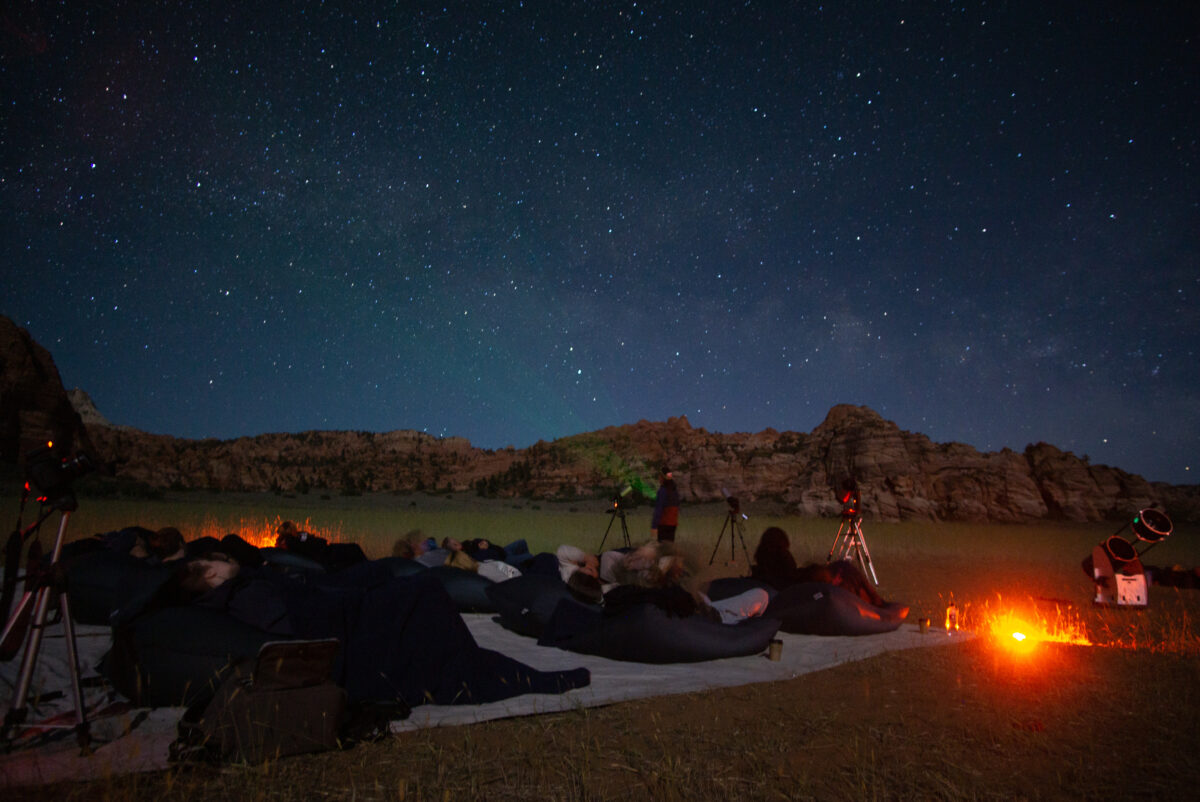
Springdale,
Utah
Springdale, the gateway to Zion National Park, is certified as an International Dark Sky Community. The town’s dark-sky-compliant lighting ordinances protect the night sky for locals and visitors.
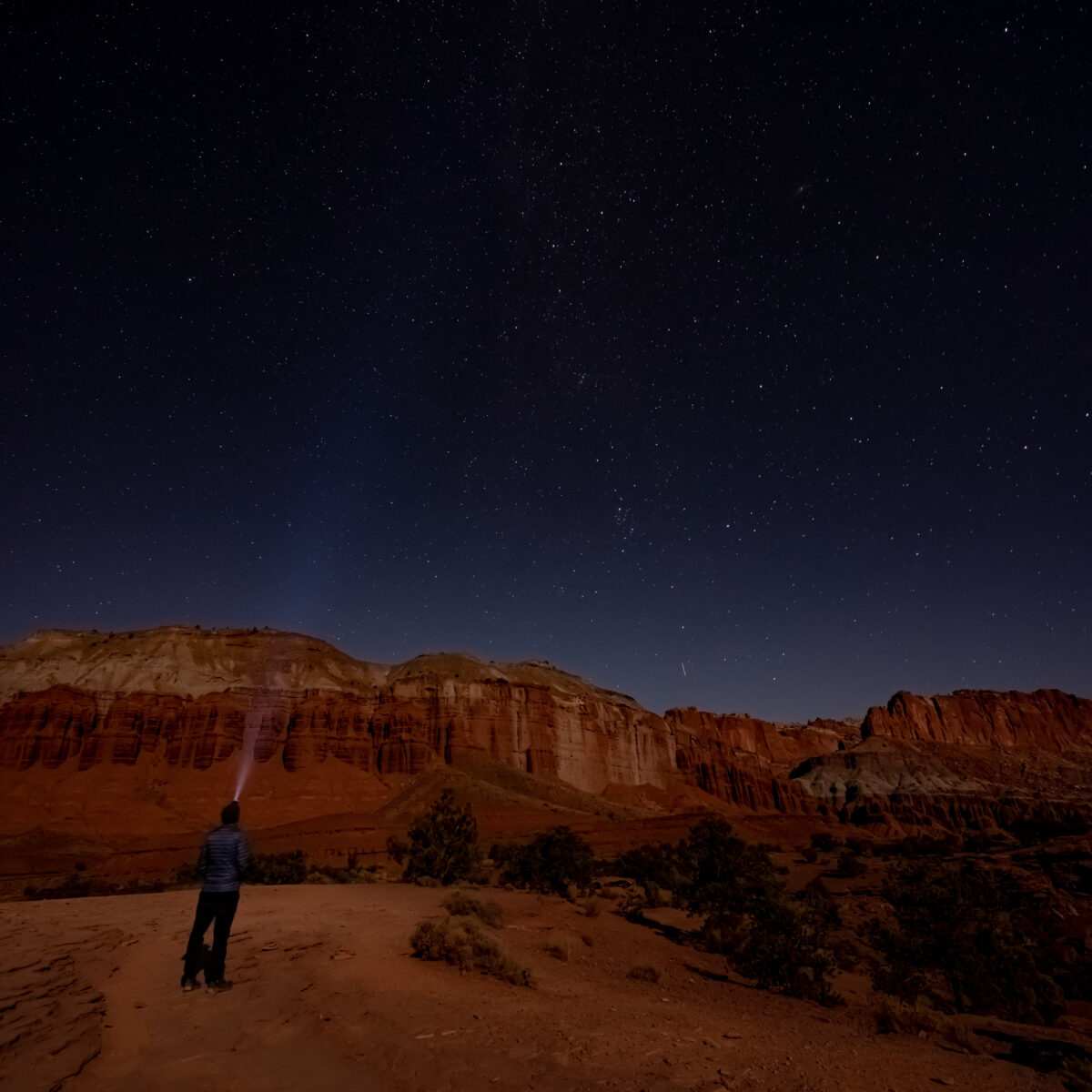
Remote Viewing Areas
Venture beyond the parks to discover hidden gems throughout Greater Zion where light pollution fades and celestial wonders emerge. Snow Canyon State Park and Gunlock State Park are both working toward International Dark Sky Designations.
Stargazing Essentials
🔴 Use Red Light
Preserve night vision with red flashlights.
🧥 Dress Warmly
Desert nights can be surprisingly cold. Layer up.
🌙 Moon Phases
Check the moon phase. New moon nights offer the darkest skies.
⏰ Allow Time
Eyes need 20-30 minutes to adjust to adjust to the dark.
Celestial Highlights
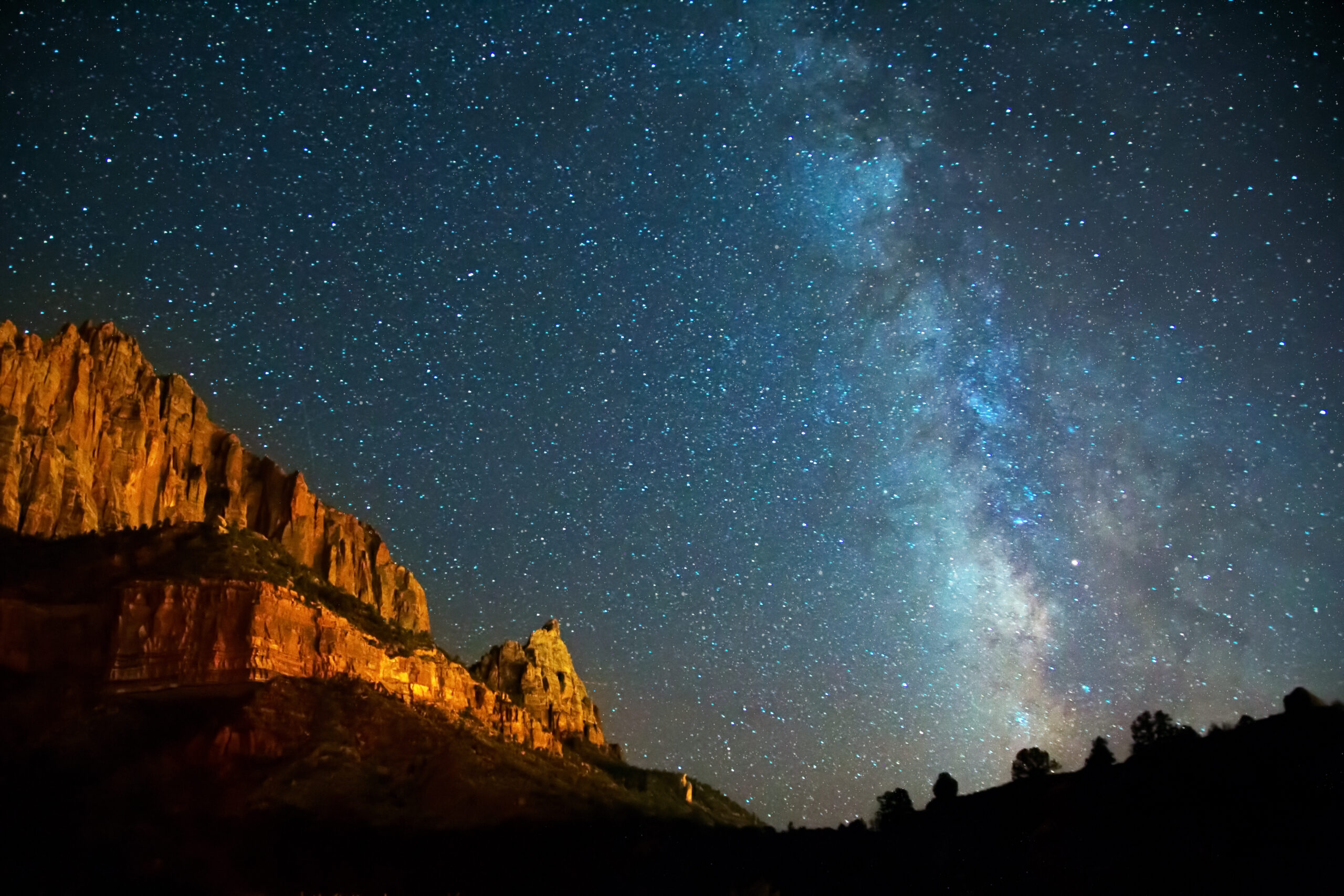
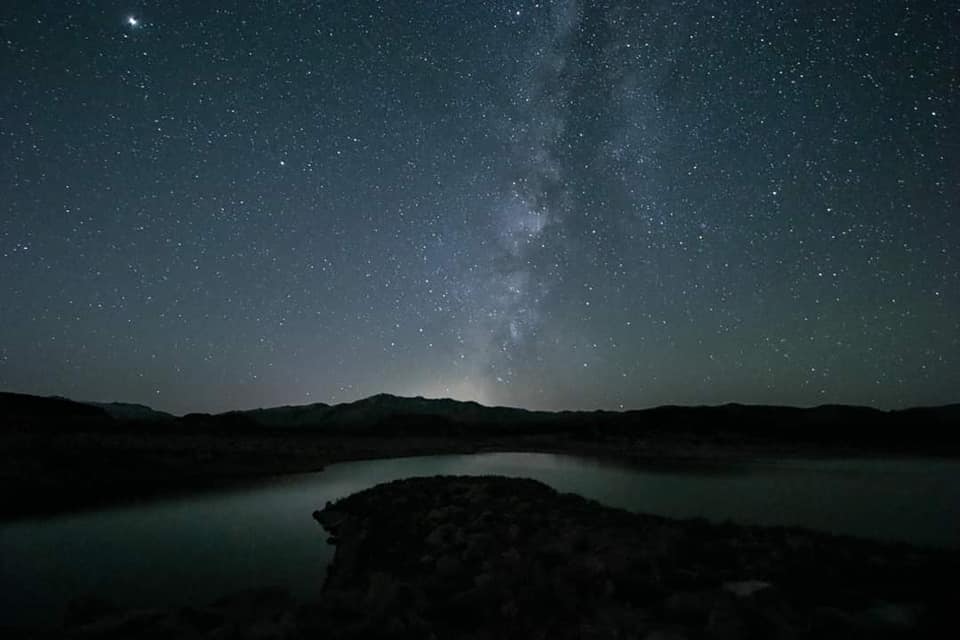
On a clear Greater Zion night, the sky becomes its own attraction. The Milky Way stretches overhead in a bright, cloud-like band, and if you visit in summer, you’ll catch the glowing center where its stars gather most densely.
Look a little farther and you can even spot the Andromeda Galaxy with the naked eye, appearing as a soft, distant smudge. Planets often join the show too, with Jupiter, Saturn, Mars, and Venus shining brighter than many stars. These celestial highlights add a memorable dimension to your southwest trip, turning an evening outside into an experience you’ll talk about long after the sun comes up.
Seasonal Constellations
- Summer: Cygnus, Lyra, Aquila, Sagittarius, and Scorpius are prominent in the southeastern sky
- Autumn: Perseus, Cassiopeia, Andromeda, Pegasus, and Aquarius appear in the northeastern sky
- Winter: Orion, Canis Major, Canis Minor, and Hydra are visible
- Spring: Scorpius, Sagittarius, Corona Borealis, Ursa Major, and Leo dominate the southern sky (Zion White Bison Resort)
Annual Meteor Showers
- The Lyrids Meteor Shower peaks in late April, producing around 20 meteors per hour
- The Perseids Meteor Shower in August attracts astronomers from across the country
- The Draconids Meteor Shower in October peaks after midnight (Stargazing Zion)
Ranger Programs
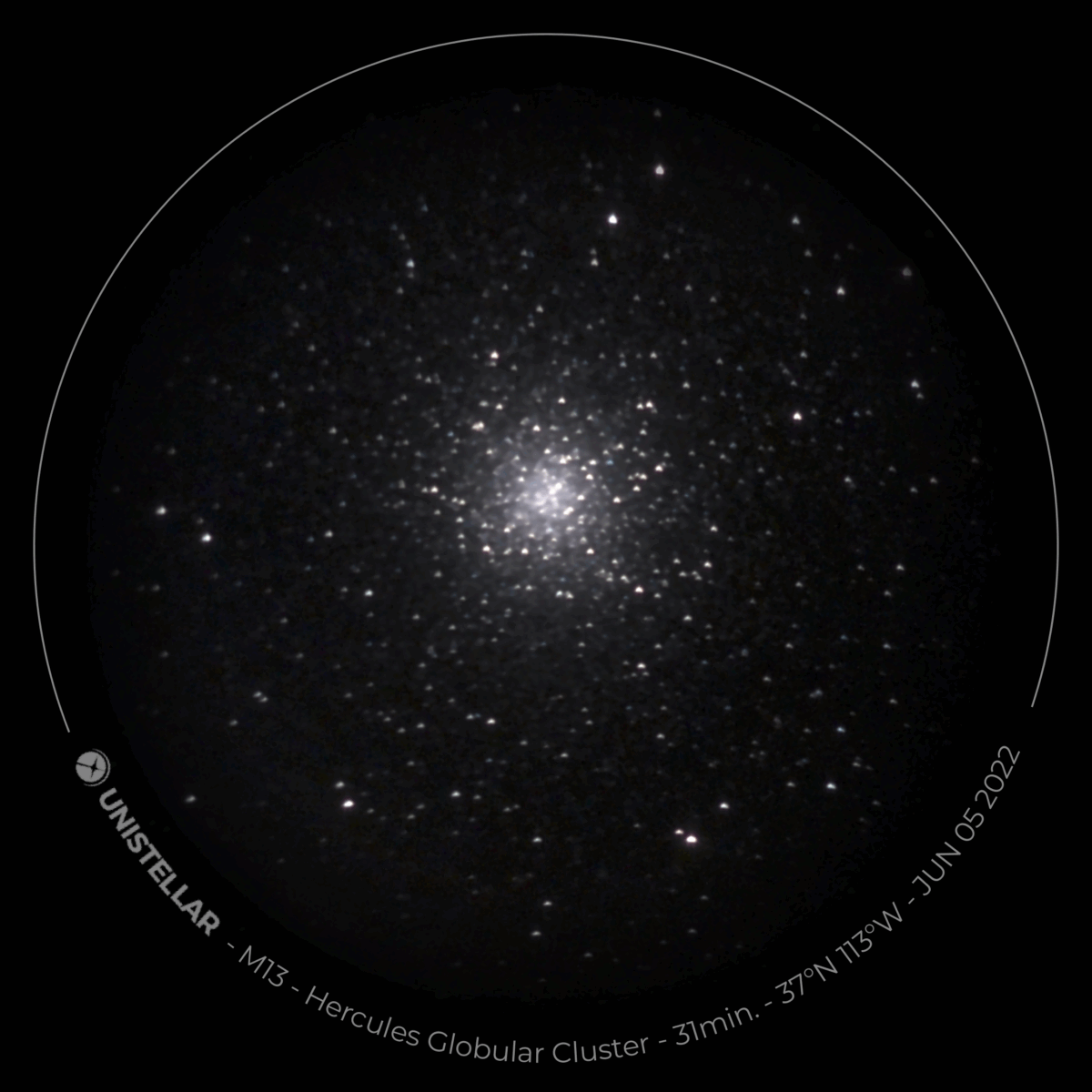
Join park rangers for telescope viewing and constellation tours at Zion National Park. Programs run from May through September.
Private Tours
Local astronomy guides offer personalized stargazing experiences with professional telescopes and expert knowledge.

Tours are led by Jenn and Rob — Air Force veterans and seasoned space professionals whose advanced studies in astronomy make every stargazing experience both accurate and delightfully easy to understand.
This experience offers unforgettable night-sky tours led by knowledgeable and engaging guides, including a science educator, a NASA-affiliated research astronomer, and a veteran astronomy program director.
Resources to Search the Southwest Skies

Capture the Night Sky
Greater Zion’s dark skies create perfect conditions for astrophotography.
- Use manual mode: ISO 3200, f/2.8, 20-30 seconds
- A sturdy tripod is essential
- Remote shutter or timer to avoid shake
- Focus on infinity in daylight, tape focus ring